Patent invalidity, solved.
End-to-end invalidity analysis from a former patent litigator, supercharged by proprietary, purpose-built AI. Faster. Cheaper. Built to withstand scrutiny.
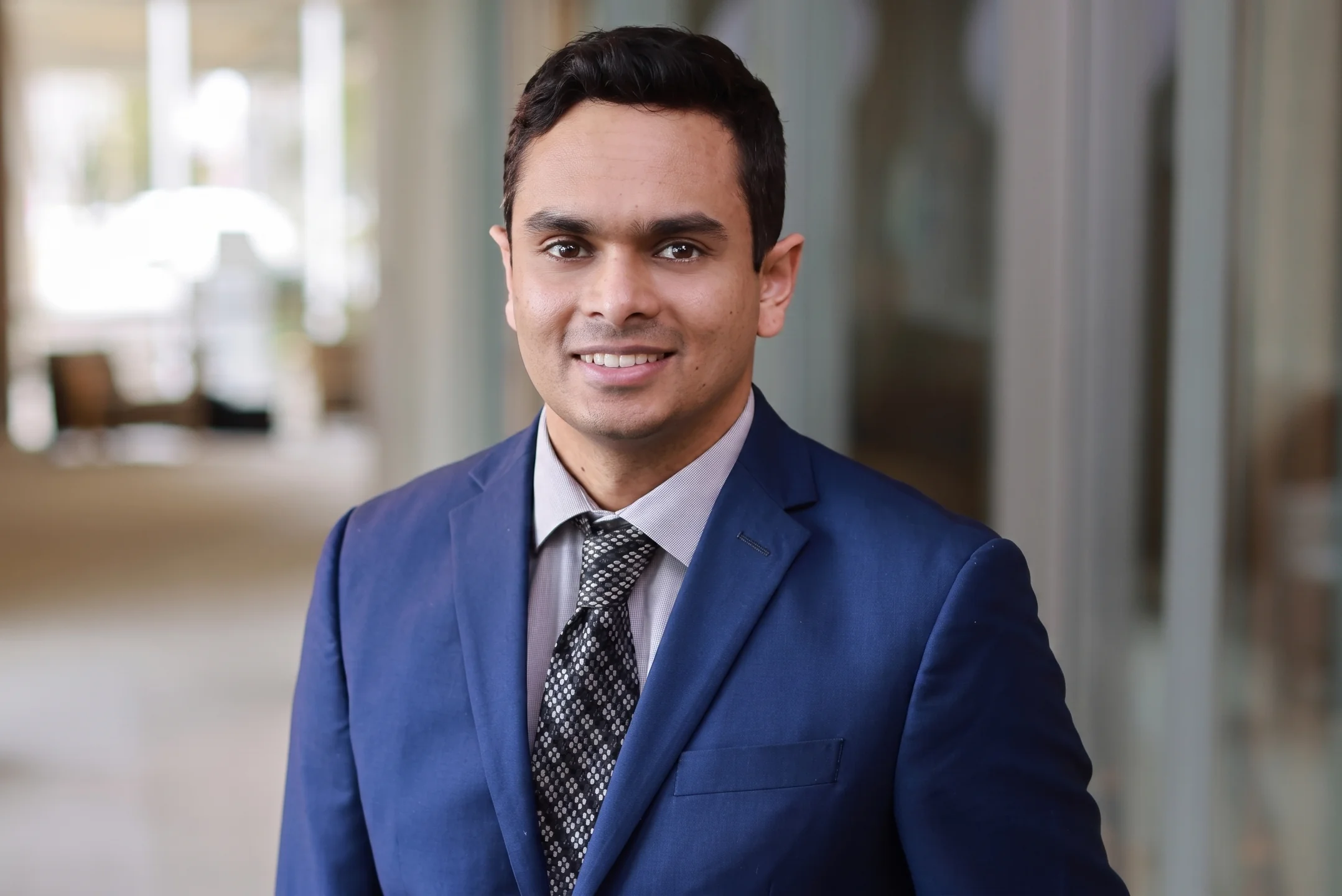
Parth Sagdeo
Searchlight came out of my own frustration as a patent litigator. Invalidity is one of the most important issues in a patent case—it can be the difference between a billion-dollar judgment and a walkaway settlement. But I found existing approaches wanting. I relied on search firms and on so-called AI search tools, but neither understood what I needed to carry my burden and win at trial. Invalidity search is like finding a needle in a hundred-million-reference haystack; I realized that to have the best chance of success, you need both the technical capability to review thousands of references and the legal acumen to redirect the search as it happens. Hundreds of thousands of lines of code later, that's what I've built. Attorney and AI, hand in glove.
Why trust me? I've argued invalidity—and won—at the Federal Circuit, in district court, and before the PTAB. When I clerked for two of the nation's leading patent jurists, Judge Dyk and Judge Stark, I saw multi-billion-dollar cases rise and fall on the strength of the invalidity arguments. Before attending Harvard Law, I wrote and obtained patents for clients including Amazon, Pixar, Visa, and Becton Dickinson. I earned computer engineering degrees from UC Berkeley and UIUC, published multiple peer-reviewed IEEE/ACM research papers, and developed software at Microsoft, VMware, and Synopsys. I know what it takes to get patents. I know what it takes to invalidate them. And I know how to build the technology to do it at scale.
Hire Searchlight and you're not buying a software tool you'd have to learn, or paying for a keyword-driven search run by analysts. You're getting a former Federal Circuit clerk and patent litigator running the search himself—supercharged by one-of-a-kind AI built specifically for the task.
Every engagement produces the same four components. They're the working materials counsel needs to advance the invalidity argument. Patent documents can also be inspected directly in the patent viewer .
Prior art
A scored and ranked set of references, with the rationale for each selection documented. The search covers worldwide patents and pre-grant publications, scientific and conference literature, and the technical record beyond academic publishing—standards, white papers, manuals, datasheets, product documentation. Every engagement also includes at least one product- or system-based option, with publicly available evidence collected and discussed.
Element-by-element claim charts
A complete mapping of claim limitations to the disclosures in each identified reference. Every chart is pin-cited; every quotation is traceable to its source.
Suggested combinations
A scored comparison of candidate reference combinations, showing the evidentiary basis for each and providing suggested motivation-to-combine and reasonable-expectation-of-success positions.
Priority chain and prosecution history
Every link in the asserted priority chain examined: for each claim limitation, whether the earlier filing (provisional or parent) actually discloses it. The file history distilled to what matters: why the patent was granted and what the applicant said in the process, pin-cited to the record.
A prior art search firm, retained by counsel. Fixed fee per matter. A deliverable built to withstand adversarial scrutiny.
Consultant
Searchlight is engaged as a non-testifying consultant. Deliverables are developed as trial-preparation materials in anticipation of litigation.
Counsel of record
Searchlight is typically retained by the law firm representing the client, not the client directly. The work enters the matter through your office.
Fixed per matter
Scoped and priced at the engagement. No hourly billing, no open-ended scope. You know what the deliverable is and what it costs.
Matter-specific
Every engagement is tied to a specific patent and a specific set of claims. Additional matters are additional engagements.
The scoping call
Every engagement begins with a conversation. We discuss the matter at a working level—the claims at issue, the likely construction arguments, the shape of the invalidity case counsel intends to build, the priority technology areas for the search.
The call is substantive. I come to it with the patent already in front of me and with initial thoughts on where the best art is likely to sit. The goal is to leave with a shared understanding of what the search is trying to accomplish.
The search
From there the work is mine. I run the retrieval pipeline across the corpus—patents worldwide and the technical literature—generate reference combinations systematically against the claim set, and fold in the prosecution history to ensure every candidate ground is constructed against the record.
The process is iterative. References that surface earn further examination; gaps in the first pass drive the second. I stop when the art is surfaced and assessed—not when a time budget runs out.
The deliverable
You receive the prior art, element-by-element claim charts, and a scored view of the invalidity grounds. Every assertion is pin-cited—backed by a quotation the reader can verify at a glance. The report is structured so counsel can adapt it directly into a reexam petition, an IPR, or invalidity contentions.
A follow-up call is available as part of every engagement.
Engagement shape is a deliberate reflection of the practice: lean, priced like a search, scoped to the matter.
If you're counsel building an invalidity case—
Send the patent number and asserted claims. I'll review the matter personally and reply with an initial assessment, likely search directions, and an expected timeline for the analysis.